
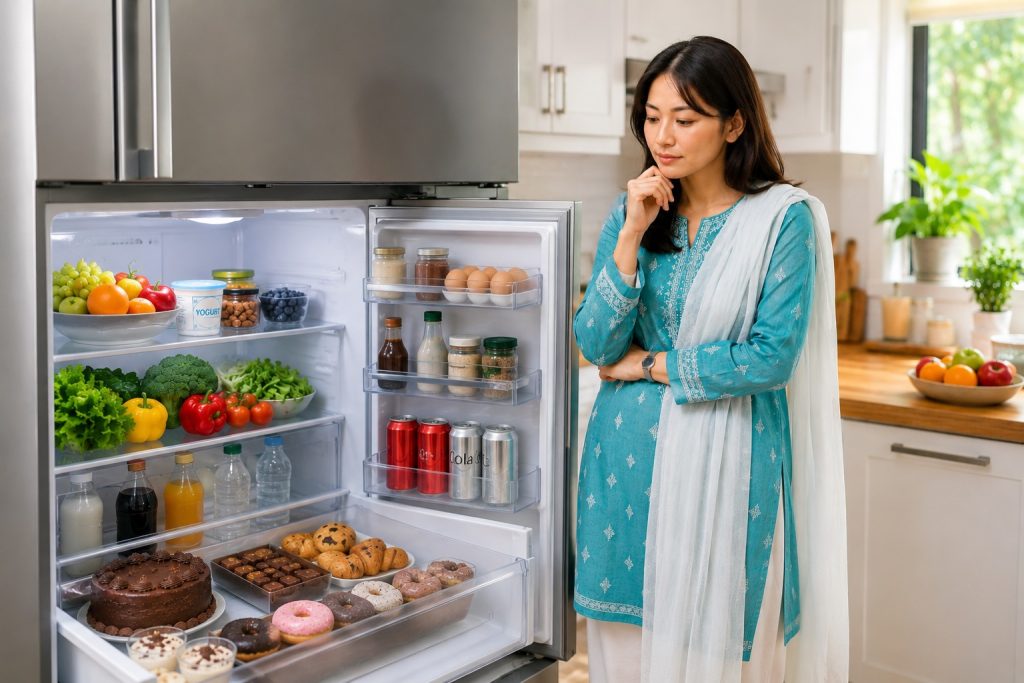
There are days when you finish a meal, yet an hour later you’re searching for something sweet.
Maybe it’s chocolate after dinner.
A biscuit with your afternoon tea.
Or a dessert that suddenly feels impossible to resist.
Most people blame themselves.
“I have no self-control.”
“I just love sugar.”
But in my experience as a health coach, sugar cravings are not always about a lack of willpower. Very often, they are your body’s way of telling you that something in your daily routine needs attention.
Instead of fighting those cravings, it helps to understand where they may be coming from. Once you do, making healthier choices often feels much easier.
Your Body May Be Asking for Balance, Not More Sugar
One of the biggest misunderstandings about sugar cravings believes they only happen because someone enjoys sweet foods.
In reality, the body often craves quick energy when it feels out of balance.
Skipping breakfast, eating meals that lack protein, drinking very little water, or relying on highly processed snacks can all leave your energy rising and falling throughout the day? When that happens, your brain naturally looks for the fastest source of fuel, and sugar becomes very appealing.
This doesn’t mean your body needs sweets. It may simply be asking for a more balanced way of eating.
If you haven’t already, learning what a balanced plate looks like can make a noticeable difference in how satisfied you feel after meals. A balanced combination of protein, fiber, healthy fats, and whole grains often helps reduce unnecessary cravings naturally.
Sleep and Stress Can Quietly Increase Sugar Cravings
Food is only one part of the picture.
I often meet people who are eating reasonably well but still find themselves reaching for sugary snacks every evening.
When we look a little deeper, poor sleep or ongoing stress is usually part of the story.
A restless night can leave the body feeling low on energy the next day. At the same time, ongoing stress may influence the hormones involved in appetite and food choices, making sweet foods feel even more tempting.
This is one reason I encourage people to look beyond the kitchen. Better sleep, regular movement, quiet moments during the day, and simple relaxation habits all support healthier eating without relying on strict diets.
If stress has become a regular part of your routine, understanding how stress affects your body may help you see why small lifestyle changes often improve more than one area of your health.
Small Changes Often Work Better Than Strict Rules
Many people respond to sugar cravings by cutting out every sweet food overnight.
For most people, that approach doesn’t last.
The body responds much better to steady, realistic habits than to extreme rules.
Eating regular meals, including enough protein, staying hydrated, sleeping consistently, and planning healthy snacks before you become overly hungry are small steps that support lasting change.
Over time, many people notice they think less about sugar not because they forced themselves to stop, but because their body feels more balanced.
Healthy habits become easier when they work with your body instead of against it.
Listen to the Message Behind the Craving
Sugar cravings are not something to fear, and they are not something to feel guilty about.
Sometimes they are simply a signal that your body needs better nourishment, more rest, or a calmer daily routine.
Rather than asking, “How do I stop craving sugar?” try asking, “What might my body be asking for today?”
That simple shift in thinking often changes the way people approach their health.
If sugar cravings have become a regular part of your day and you’re not sure where to begin, you don’t have to figure it out alone. A health coach can help you understand the lifestyle patterns that may be contributing to those cravings and guide you toward practical changes that fit your daily life. The goal isn’t to remove every treat it’s to build habits that help you feel healthier, more energetic, and more in control over time.
Frequently Asked Questions ❓
Why do I crave sugar even after eating?
Sometimes cravings are linked to unbalanced meals, poor sleep, stress, or dehydration rather than true hunger.
Can stress make sugar cravings worse?
Yes. Ongoing stress may influence appetite and increase the desire for quick sources of energy, including sugary foods.
Should I completely stop eating sugar?
For most people, a balanced and sustainable approach works better than strict restrictions. Small, consistent lifestyle changes are usually easier to maintain.
Written by: Shamim Akhtar
Certified Health & Wellness Coach
Public Health Nutrition & Lifestyle Medicine Professional.