
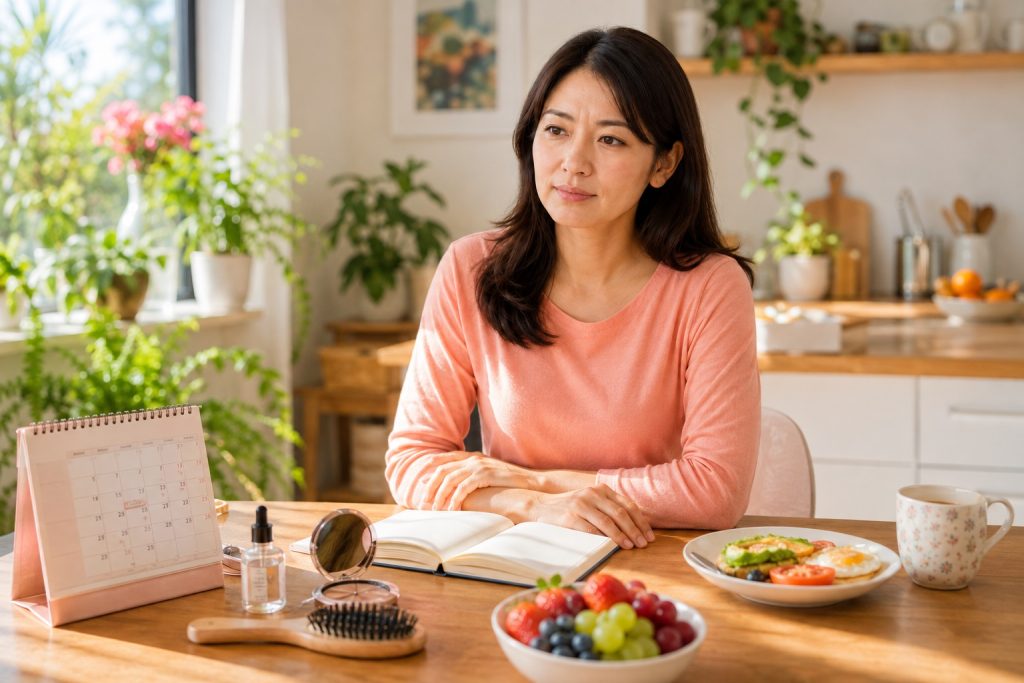
Your period was supposed to arrive a few days ago.
You wait.
Then you wait a little longer.
Maybe it has happened before, so you don’t think much of it.
But this time, your skin has also been breaking out more than usual.
There seems to be more hair on your face.
And lately, your weight has been changing in a way you don’t quite understand.
You pause and think,
“Is this all just a coincidence?”
If you’ve ever wondered whether these changes could be connected to PCOS, you’re certainly not alone.
PCOS, or polycystic ovary syndrome, can affect women differently. Some first notice changes in their periods, while others notice changes in their skin, hair, weight, or overall wellbeing.
The important thing is not to worry about every change.
It is to understand the patterns your body may be showing you.
As a Health & Wellness Coach, I’ve found that paying attention to these signals can be an important first step towards taking better care of your health.
Your Periods May Be One of the First Signs to Notice
One of the first changes you may notice is a shift in your usual menstrual pattern.
Perhaps your periods used to arrive regularly, but now they are difficult to predict.
Maybe there are longer gaps between them, or your cycle has simply become different from what was normal for you.
An irregular period does not automatically mean you have PCOS. Stress, weight changes, sleep, exercise, and other health factors can also affect your menstrual cycle.
But when the change keeps happening, it is worth paying attention.
Ask yourself:
Has this happened more than once?
Is this becoming my new normal?
Have I noticed other changes at the same time?
Sometimes your body doesn’t give you one obvious signal.
It gives you several small ones.
Learning to notice these patterns can help you decide when it may be worth talking to a healthcare professional.
Changes in Your Skin, Hair, and Weight May Also Be Worth Noticing
Not every sign of PCOS involves your menstrual cycle.
You may notice more acne or oilier skin, increased facial or body hair, thinning hair on the scalp, or changes in your weight that you don’t quite understand.
But remember:
Having one of these signs does not mean you have PCOS.
Many of these changes can happen for other reasons too. Rather than focusing on one symptom, look at the bigger picture.
Are several changes happening together? Have they continued for some time? Are they different from what is normal for you?
These patterns can help you become more aware of your health without immediately assuming something is wrong.
If you’ve wondered how hormonal changes can affect your energy, mood, sleep, and daily wellbeing, you may also enjoy reading How Hormonal Changes Affect Women’s Energy and Daily Well-Being.
Don’t Ignore Patterns, But Don’t Panic Either
It can be tempting to search every symptom online and try to work out what is happening yourself.
One search leads to another, and suddenly a small change can feel much bigger than it really is.
But your body is more than a list of symptoms you find online.
Irregular periods, acne, changes in weight, or increased hair growth can have different causes. Rather than trying to diagnose yourself, start by paying attention to the patterns.
Keep a simple record of your periods and notice changes in your skin, hair, weight, or anything else that feels different from your usual routine.
Even a few simple notes can help you recognise whether something is occasional or becoming a regular pattern.
If you’ve also been feeling unusually tired, our article What Constant Fatigue May Be Telling You may help you understand how sleep, nutrition, activity, and other daily habits can influence the way you feel.
If several changes continue or begin affecting your everyday life, consider discussing them with a qualified healthcare professional.
You don’t need to wait until you’re certain something is wrong.
Sometimes simply saying, “I’ve noticed these changes and I’d like to understand them better,” is a good place to start.
Listen to Your Body Without Becoming Afraid of Every Change
Not every change in your body is a reason to worry.
But repeated changes deserve your attention.
If your periods have become consistently irregular, or you’re noticing changes in your skin, hair, weight, or overall wellbeing, don’t simply push them aside.
Taking care of yourself doesn’t have to mean making dramatic changes overnight. Regular movement, balanced meals, enough restful sleep, and healthier ways to manage daily stress can help create a stronger foundation for your overall wellbeing.
If you’re noticing several changes and don’t know where to begin, you don’t have to figure everything out alone.
As a Health & Wellness Coach, I can help you look at your everyday lifestyle, nutrition, sleep, movement, and other habits and identify small, sustainable changes that fit naturally into your life.
If you’d like support in understanding your everyday lifestyle patterns and building healthier habits, feel free to reach out. Together, we can take a practical, sustainable approach that works for you.
Sometimes better health doesn’t begin with knowing exactly what is happening.
It begins with noticing that something has changed.
And giving yourself permission to listen.
Frequently Asked Questions ❓
What are the early signs of PCOS?
Common signs may include changes in menstrual cycles, increased facial or body hair, acne or oily skin, scalp hair thinning, and changes in weight. These signs can have other causes and do not confirm PCOS on their own.
Does having irregular periods mean I have PCOS?
Not necessarily. Irregular periods can happen for many reasons. However, if your periods remain irregular or you notice other changes at the same time, it is worth discussing them with a qualified healthcare professional.
Can PCOS cause acne or unwanted facial hair?
Yes, some women with PCOS may experience acne, oily skin, or increased facial and body hair. However, these changes can also have other causes and should not be used alone to assume that someone has PCOS.
When should I talk to a doctor about possible PCOS?
If changes in your periods, skin, hair, weight, or overall wellbeing continue or begin affecting your daily life, consider speaking with a qualified healthcare professional for proper assessment.
Written by: Shamim Akhtar
Certified Health & Wellness Coach
Public Health Nutrition & Lifestyle Medicine Professional.